





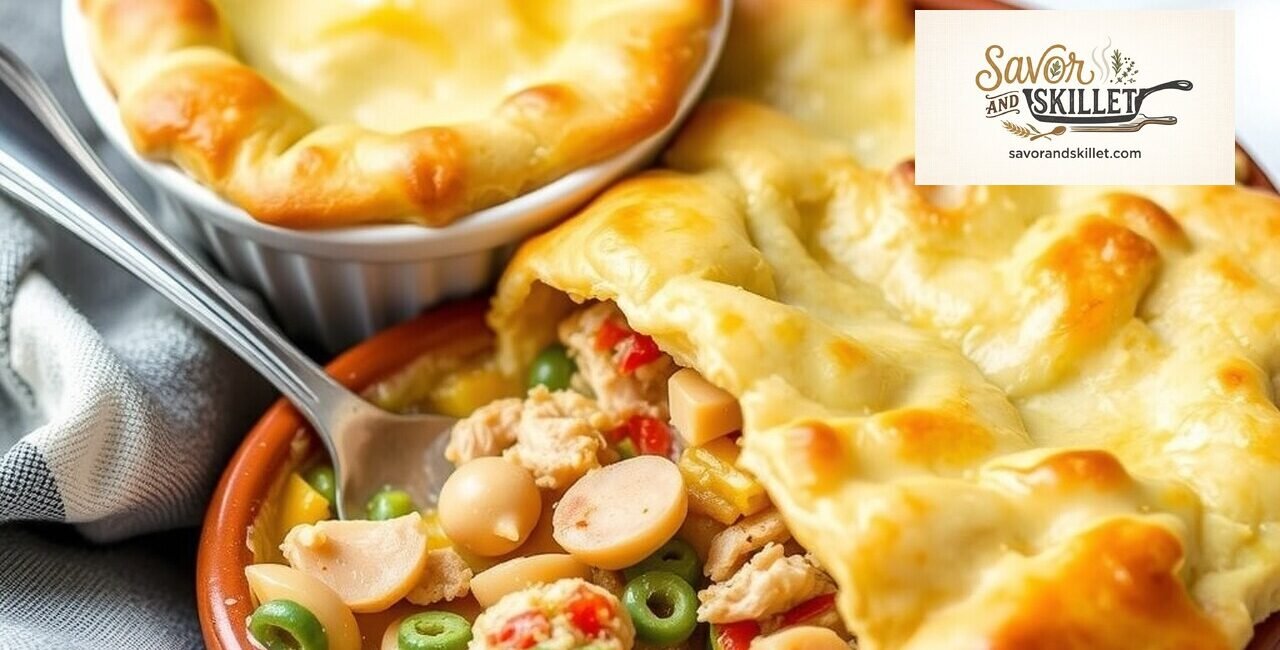
Few meals evoke the same level of comfort as a bubbling, golden-crusted Turkey Pot Pie. Whether you are looking for a way to repurpose leftover poultry from a holiday roast or simply craving a savory, vegetable-packed dinner, this dish remains a timeless staple in the American kitchen. At Savor and Skillet, we believe that mastering this classic recipe is a rite of passage for any home cook in 2026. If you are ready to elevate your midweek menu with a meal that promises flaky pastry and a rich, creamy filling, let’s walk through exactly how to achieve that perfect result.
Also Read: How to Make Blueberry Pancakes: Recipe and Instructions
What is Turkey Pot Pie?

Turkey Pot Pie is a savory baked dish consisting of cooked turkey chunks, seasonal vegetables like carrots, peas, and celery, and a thick, herb-infused gravy, all sealed beneath a golden, flaky crust. It is prized for its balance of textures—the crunch of the pastry against the tender, velvety filling—making it a quintessential comfort food that is deeply satisfying and highly customizable.
Beyond its texture, this dish is a masterclass in utility. It allows for the integration of various aromatics and proteins, meaning you can adapt the flavor profile to match whatever is currently in your pantry. By understanding the foundational ratio of fats to flour in your roux and the proper handling of your pastry, you can create a restaurant-quality meal right in your own kitchen.
Ingredients and Preparation

Recipe Overview
- Servings: 6
- Prep Time: 25 minutes
- Cook Time: 45 minutes
- Total Time: 1 hour 10 minutes
- Difficulty: Intermediate
To ensure your success, gather these specific ingredients before you begin. Quality matters here; using a high-quality store-bought puff pastry or a homemade butter crust is the secret to a professional finish.
- Poultry: 3 cups cooked turkey, shredded or cubed (leftover roast turkey works best).
- Fat: 4 tablespoons unsalted butter.
- Aromatics: 1 medium yellow onion (finely diced), 2 stalks celery (sliced thin), 2 cloves garlic (minced).
- Vegetables: 2 large carrots (peeled and diced), 1 cup frozen peas.
- Thickener: 1/3 cup all-purpose flour.
- Liquid: 2 cups low-sodium chicken or turkey stock, 1/2 cup heavy cream.
- Herbs & Seasoning: 1 teaspoon dried thyme, 1/2 teaspoon dried rosemary, 1/2 teaspoon kosher salt, 1/4 teaspoon black pepper.
- Crust: 1 sheet puff pastry (thawed) or your favorite pie crust dough.
- Wash: 1 large egg beaten with 1 tablespoon water for the egg wash.
Equipment-wise, you will need a 10-inch cast-iron skillet or a deep-dish ceramic pie plate, a whisk, and a sharp knife. If you prefer a shortcut, feel free to use a rotisserie chicken if turkey is out of season. Always ensure your stock is at room temperature to prevent clumping when creating your roux.
How to Make Turkey Pot Pie
Since you now understand the essential ingredients required for a balanced filling, let’s move on to the actual assembly — where the real magic happens. Precision in your heat management during the sauce-making process is the key to ensuring your gravy is smooth rather than floury or thin.
- Preheat and Prep: Preheat your oven to 400°F (200°C). Prepare your vegetable mise en place, ensuring your carrots and celery are uniform in size to ensure even cooking times.
- Sauté the Aromatics: Melt the 4 tablespoons of butter in a large skillet over medium heat. Add the onions, carrots, and celery. Sauté for 6-8 minutes until the onions are translucent and the carrots have softened slightly. Stir in the garlic and herbs, cooking for another 60 seconds until fragrant.
- Create the Roux: Sprinkle the flour over the vegetables and stir constantly for 2-3 minutes. This “cooking out” of the flour is critical; if you skip this, your final gravy will have a raw, chalky taste.
- Deglaze and Thicken: Slowly whisk in the turkey stock, ensuring you scrape the bottom of the skillet to incorporate any flavorful brown bits (fond). Once incorporated, whisk in the heavy cream. Bring to a gentle simmer for 3-5 minutes until the mixture thickens enough to coat the back of a wooden spoon.
- Combine: Fold in the cooked turkey chunks and frozen peas. Remove from the heat. Taste and adjust for salt and pepper; remember that the pastry will be unsalted, so the filling should be well-seasoned.
- Assemble: Transfer the mixture to your baking dish if not already in an oven-safe skillet. Drape your puff pastry or pie dough over the top, trimming the edges and crimping them against the rim of the dish. Cut three or four small slits in the center to allow steam to escape.
- Bake: Brush the crust with your egg wash to ensure a deep, mahogany shine. Place the dish on a baking sheet (to catch any bubbles) and bake for 30-35 minutes, or until the crust is puffed and golden brown and the filling is bubbling thick through the slits.
With tender chunks of turkey, a flavorful vegetable filling, and a rich, savory, spice-infused gravy—all encased in a golden, flaky pastry crust—Turkey Pot Pie is the ultimate comforting meal to refuel and satisfy a hungry appetite. I’m sharing this hearty classic here on Savor and Skillet so you can serve up a delicious, nutritious, and heartwarming dish to brighten your day.
To ensure the pastry rises beautifully and turns crispy, and that the filling is perfectly thick without making the bottom crust soggy, check out the secrets to making it in the video tutorial I’ve included below:
Expert Tips for the Best Turkey Pot Pie
With the cooking process under your belt, we need to address the common technical pitfalls that can derail an otherwise perfect dish. A common mistake many home cooks make involves the consistency of the filling before it hits the oven; if your gravy is too thin when you add the pastry, the crust will likely become soggy from the bottom up.
To avoid this, ensure your gravy reaches a heavy, nap-consistency—it should be thick enough that when you drag a spoon through the center, it takes a second for the sauce to flow back into the path. Additionally, if you find your pastry is browning too quickly before the filling is fully heated, loosely tent the top with aluminum foil for the final 10 minutes of baking.
For those who love extra depth, consider adding a dash of Worcestershire sauce or a tablespoon of dry sherry to the gravy base. According to 2026 culinary trends, using fresh herbs like sage or thyme significantly increases the aromatic appeal of pot pies compared to dried versions. For more guidance on seasoning your poultry dishes, check out our resource on proper herb pairings for savory baking.
Storage, Reheating, and Variations
Building on that foundation of cooking and technique, let’s look at how to handle leftovers or modify the recipe for different dietary needs. Storage is straightforward: allow the pie to cool to room temperature before covering it tightly with plastic wrap or transferring individual portions to an airtight container.
In the refrigerator, this dish will keep for up to three days. When you are ready to reheat, avoid the microwave if you want to maintain the crust’s integrity. Instead, reheat individual slices in a 350°F oven for 15 minutes. If you want to experiment with variations, try swapping the turkey for leftover roast pork or even a combination of roasted mushrooms and chickpeas for a vegetarian twist. For more insights on food storage, refer to the official FDA guidelines on handling cooked leftovers to ensure maximum safety in your home kitchen.
Frequently Asked Questions About Turkey Pot Pie
Can I make this recipe ahead of time?
Yes, you can prepare the filling up to 24 hours in advance and store it in the refrigerator. However, it is best to add the pastry crust and bake it just before serving to ensure the dough remains as crisp as possible.
Why is my pot pie filling runny?
A runny filling usually happens when the flour hasn’t been cooked long enough to activate its thickening properties, or there was too much liquid added. Make sure to simmer the gravy until it coats the back of a spoon thoroughly before adding it to your baking dish.
What is the best type of crust for turkey pot pie?
Puff pastry is widely considered the best choice because it provides a light, buttery crunch that contrasts beautifully with the dense, creamy filling. Alternatively, a traditional flaky pie crust works well if you prefer a sturdier, more “classic” pie experience.
Can I use a rotisserie chicken instead of turkey?
Absolutely, rotisserie chicken is an excellent substitute and works perfectly in this recipe. Just be sure to remove all the skin and shred the meat into bite-sized pieces to keep the texture consistent with the vegetable size.
How do I prevent the bottom of the crust from getting soggy?
To prevent a soggy bottom, ensure your filling is not boiling hot when you place the raw pastry on top, as the steam will immediately soften the dough. You can also bake the pie on the lowest rack of your oven to focus more heat on the base.
Conclusion
After covering the techniques, ingredients, and common questions regarding the perfect Turkey Pot Pie, it is clear that this dish is as much about process as it is about taste. By focusing on your roux consistency and paying attention to the doneness of your pastry, you can create a meal that defines home-cooked quality. Whether you are using up leftovers from a 2026 holiday gathering or making a fresh batch for a cozy Sunday dinner, remember that patience with your filling is the secret ingredient. Try this recipe this weekend and see how satisfying it is to pull a bubbling, golden pie from your own oven. If you enjoyed this guide, be sure to bookmark Savor and Skillet for more essential kitchen techniques!

Other Articles

New England Lobster Roll Recipe: How to Make It Step by Step
Chicken Pot Pie Recipe: How to Make It

No Comment! Be the first one.