




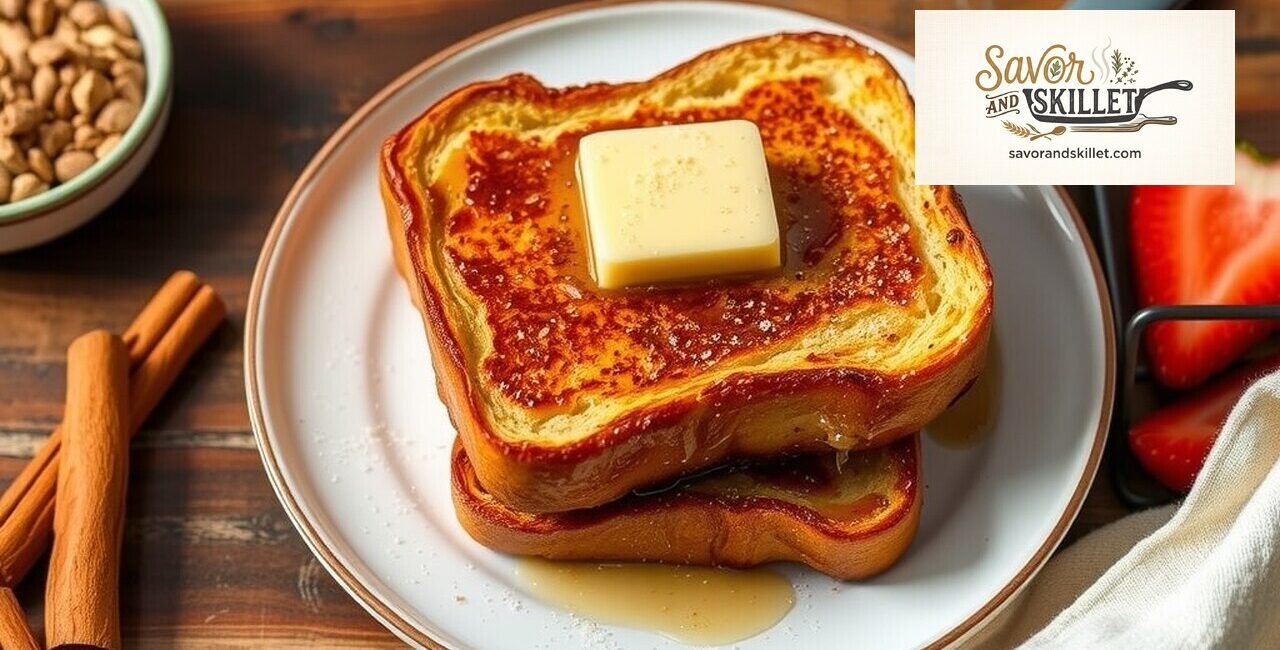
There is something undeniably comforting about the aroma of cinnamon, vanilla, and browned butter wafting through the kitchen on a slow weekend morning. If you are searching for the ultimate french toast recipe, you have likely realized that the difference between soggy bread and a golden, caramelized masterpiece comes down to technique rather than fancy ingredients. At Savor and Skillet, we believe that mastering this breakfast staple is one of the most rewarding culinary skills you can develop in 2026. Whether you are a novice cook or a seasoned home chef, this easy french toast recipe will help you achieve that elusive contrast of crispy, buttery edges and a soft, custard-like center every single time you fire up the stovetop.
What is a Classic French Toast Recipe?

A french toast recipe is a culinary preparation consisting of sliced bread soaked in a whisked mixture of eggs, milk or cream, and aromatics like vanilla and cinnamon, then pan-fried until golden brown. This dish relies on the Maillard reaction to create a complex, caramelized exterior while keeping the interior moist and tender, providing a satisfying, protein-rich breakfast experience that balances textures and rich, warm flavors.
Understanding this balance is essential for success. When you follow a consistent french toast recipe, you aren’t just heating up bread; you are essentially creating a stovetop custard inside a bread crust. The trick lies in the ratio of liquids to fats, which ensures the bread doesn’t turn into a mushy, undercooked mess. By focusing on high-quality pantry staples and precise heat management, even a simple breakfast becomes a restaurant-quality event.
Ingredients and Preparation

Now that we have established the culinary foundation of the perfect slice, let’s look at the essential components required for our french toast recipe. Preparation is the secret weapon of professional kitchens, and having your mise en place ready before the skillet hits the heat will make your cooking process significantly smoother.
Recipe Details
- Servings: 4 people
- Prep Time: 10 minutes
- Cook Time: 15 minutes
- Total Time: 25 minutes
- Difficulty: Easy
Ingredients
- 8 thick slices of Brioche or Challah bread (stale bread works best)
- 4 large eggs
- 3/4 cup whole milk or half-and-half
- 1 tablespoon granulated sugar
- 1 teaspoon pure vanilla extract
- 1/2 teaspoon ground cinnamon
- 1/4 teaspoon ground nutmeg (freshly grated is best)
- Pinch of fine sea salt
- 3 tablespoons unsalted butter (for frying)
For the equipment, I recommend a heavy-bottomed cast-iron skillet or a high-quality non-stick pan to ensure even heat distribution. A wide, shallow dish is also necessary to soak the bread slices evenly without them breaking apart. If you find your bread is too fresh, you can lightly toast it in the oven for five minutes to prevent it from absorbing too much liquid and becoming overly soggy.
How to Make French Toast
With your ingredients prepped and your tools ready, it is time to assemble our french toast recipe. Cooking is a tactile process, so follow these steps carefully to ensure your toast achieves that signature golden-brown color and perfect internal texture.
- Prepare the Custard: In your shallow dish, whisk together the eggs, milk, sugar, vanilla, cinnamon, nutmeg, and salt. Ensure the mixture is completely uniform, as any remaining streaks of egg white will result in uneven texture.
- The Soak: Dip each slice of bread into the mixture. If using sturdy brioche, let it soak for about 20-30 seconds per side. If the bread is thinner or softer, a quick dip (10 seconds) is sufficient to prevent the slice from falling apart.
- Heating the Pan: Place your skillet over medium heat. Add 1 tablespoon of butter. When the butter begins to foam but before it browns, it is ready for the first batch.
- Cooking for Perfection: Place the soaked bread into the hot skillet. Do not overcrowd the pan, as this lowers the temperature and causes steaming instead of frying. Cook for 3-4 minutes per side. You are looking for a deep, golden-brown crust.
- The Doneness Cue: The toast is done when it feels firm to the touch and the exterior is crisp. If you press the center lightly, it should spring back rather than feel like wet dough.
- Resting: Remove from the skillet and place on a wire rack for one minute before serving to allow the heat to stabilize and keep the crust from softening.
Now guys, i want to show it to you a video about How to Make The Best French Toast You’ll Ever Make (Restaurant-Quality) by epicurious:
Chef Techniques and Tips
Since you now understand the fundamental steps to creating the perfect french toast recipe, let’s look at how to refine your technique to avoid common mistakes. Even in 2026, the most common issues reported by home cooks—like soggy interiors or burnt outsides—are easily corrected with a few minor adjustments to your workflow.
The most important piece of advice is to use the right bread. Avoid thinly sliced sandwich bread, which lacks the structural integrity to hold the custard. Sourdough or thick-cut Brioche are preferred because they provide a sturdy canvas. If you are struggling with a soggy center, check your heat level. If the burner is too high, the outside burns before the custard sets. If it is too low, the bread just soaks up butter and turns greasy. Aim for a steady medium heat that sizzles gently when the bread hits the pan.
Another tip from the Savor and Skillet kitchen: always use a wire rack for cooling. If you place the finished toast directly on a plate, the residual steam will be trapped underneath the bread, which instantly turns that hard-earned crispy crust soft and limp. A wire rack allows air to circulate underneath, maintaining that crunch.
Variations and Pairings
After mastering the basics of this french toast recipe, the obvious next question is: how can you customize it? While the classic version is iconic, there are several ways to elevate your breakfast without complicating the cooking time.
For a decadent twist, consider replacing half of the whole milk with heavy cream or even coconut milk for a tropical profile. You can also experiment with citrus zest, such as orange or lemon, whisked into the custard for a brighter, more vibrant flavor. If you want to impress guests, try topping the finished toast with fresh macerated berries or a simple compote made by simmering fruit with a little maple syrup.
Pairing is just as important as the dish itself. A side of thick-cut bacon or savory sausage helps balance the sweetness of the french toast. For a balanced meal, include a serving of fresh fruit—like sliced strawberries or blueberries—to cut through the richness of the butter and egg custard. As noted in various culinary resources, including Serious Eats, the quality of your maple syrup significantly impacts the final result; always choose pure grade A maple syrup over high-fructose corn syrup alternatives.
Frequently Asked Questions About French Toast Recipe
What is the best bread to use for french toast?
The best bread is a thick-sliced, enriched bread like Brioche or Challah. These breads have a high fat and sugar content, which allows them to absorb the custard without disintegrating, resulting in a superior texture.
How do I prevent my french toast from getting soggy?
To avoid soggy toast, ensure your bread is slightly stale or lightly toasted before soaking, and do not let it sit in the egg mixture for too long. Over-soaking is a common error that leads to a mushy, unpleasant center.
Can I make this french toast recipe in advance?
While french toast is best served immediately, you can prepare the custard mixture the night before. Keep the bread separate and only soak the slices right before you are ready to fry them to maintain the best quality.
What is the ideal cooking time for french toast?
The ideal french toast cooking time is generally 3 to 4 minutes per side over medium heat. This timing allows the eggs in the custard to cook thoroughly while ensuring the exterior achieves a beautiful, golden-brown caramelization.
How should I store and reheat leftovers?
Store any leftover slices in an airtight container in the refrigerator for up to two days. To reheat, avoid the microwave, which will make them rubbery; instead, toast them in a conventional toaster or a preheated oven at 350°F (175°C) until warmed through and crisp again.
Conclusion
We just unpacked the core techniques and nuances of the perfect french toast recipe — now here’s where it gets really interesting: once you have the base ratio of eggs, milk, and spices, you are free to experiment with your own flavor profiles. Whether you stick to the classic cinnamon and vanilla or venture into orange zest and cardamom, the key is maintaining that balance of heat and care during the cooking process.
As we navigate through 2026, keeping a reliable recipe in your repertoire is a great way to ensure stress-free, delicious mornings. Remember, the goal of this french toast recipe is to provide a consistent, high-quality result that turns a simple breakfast into something special. If you found this guide helpful, I invite you to share your results or tag us when you try this at home. Happy cooking, and enjoy those crispy edges!

Other Articles

High-Protein Breakfast Recipes That Keep You Full
Easy Baba Ganoush with Smoky Eggplant

No Comment! Be the first one.