





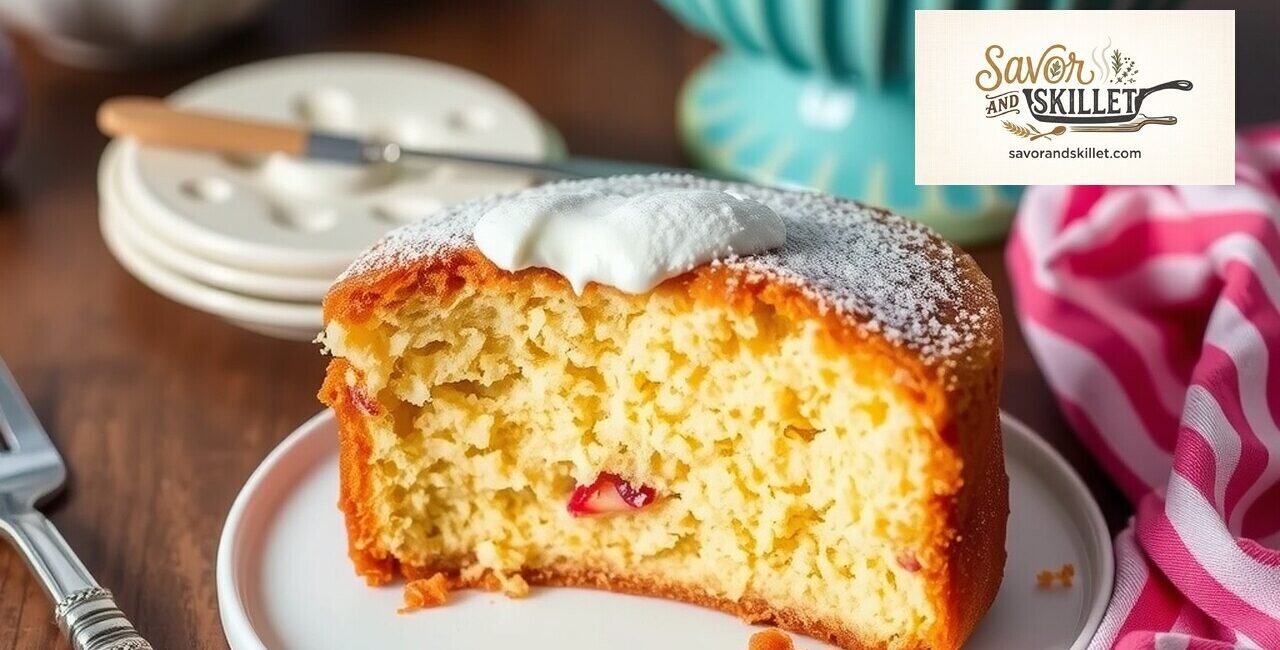
There is nothing quite as heartbreaking for a home baker as pulling a beautiful, golden-brown cake from the oven only to watch the center collapse into a crater as it cools. If you find yourself asking why cakes sink in the middle and how to prevent it, you are certainly not alone; it remains one of the most common kitchen frustrations documented in 2026. Understanding the science behind this structural failure is the first step toward achieving a perfect crumb every time, and why cakes sink in the middle and how to prevent it is a masterclass in baking chemistry. Let’s break this down step by step.
Also Read: Overnight Oats: Basic Formula, Flavor Ideas, and Storage Tips
Understanding Why Cakes Sink in the Middle and How to Prevent It
why cakes sink in the middle and how to prevent it is the process of identifying and correcting structural weaknesses in the leavening and setting phases of baking. A sinking cake typically occurs when the center fails to set properly before the air bubbles escape, often caused by excessive leavening, premature opening of the oven door, or under-baking, which causes the internal protein matrix to collapse.
When we look at the mechanics of a sponge or butter cake, we are essentially building a foam structure that must solidify through heat. According to the King Arthur Baking troubleshooting guide, consistency in ingredient temperature and precise measurements are the primary deterrents against this phenomenon. In my view, the most common culprit is a lack of patience during the cooling process, which we will explore further below.
The Science of Structural Integrity

At a molecular level, a cake relies on a network of proteins from flour and emulsifiers from eggs to hold up the air created by leavening agents. If your oven temperature is too low, the structure does not “set” fast enough, causing the cake to rise and then fall as the heavy batter drags down the weak walls of the air bubbles. This is exactly what beginners experience when they guess on oven settings rather than using a calibrated oven thermometer.
The Impact of Leavening Agents
Too much baking powder or baking soda creates an aggressive rise that the flour proteins cannot support. In 2026, we see many home bakers using old leavening agents that provide inconsistent results. If you skip this section, don’t say I didn’t warn you: check your expiration dates! If your baking powder has been sitting in your pantry for over six months, its efficacy drops, often leading to a chemical imbalance that results in a rapid rise followed by a total collapse.
The Critical Role of Temperature and Timing
Now that we’ve covered the structural science behind why cakes sink in the middle and how to prevent it, let’s dive into the critical role of temperature and timing. It is a common misconception that baking is purely an art; in reality, it is a rigid science where even a five-degree variance in your oven’s thermostat can alter the rise of a delicate chiffon or pound cake.
Mastering Oven Calibration
Most modern ovens, even high-end models from brands like Bosch or KitchenAid, have a “swing” in temperature. I have found that placing an independent, stainless steel oven thermometer on the center rack is the only way to be certain of your internal environment. When the oven is too hot, the edges cook and harden before the center can rise; when it is too cool, the center never sets, leading to that dreaded dip once you pull the pan out.
The “Don’t Peek” Rule
I completely understand the frustration of wanting to watch your creation rise through the glass, but every time the oven door opens, you lose significant heat. This thermal shock causes the internal temperature to drop instantly, putting immense pressure on the fragile crumb structure. If you are baking a temperamental sponge, keep that door closed until the final few minutes of the recommended bake time.
The Savor and Skillet admin has also prepared a video tutorial so you can learn the process thoroughly—no half-measures here! The video included below is from the YouTube channel Baking Intelligence and is titled “Why Your Cake Sinks in the Middle — Mistakes Most Bakers Make & Easy.”
The title itself gives you a bit of a spoiler, doesn’t it? It turns out the video offers a tutorial that is incredibly easy to follow, with clear, concise explanations. I believe that by watching this video, you can become an even more skilled baker. Without further ado, here is the video for you to watch:
Ingredient Quality and Preparation Tactics
Since you now understand the importance of temperature control and the timing of your bake, let’s talk about how ingredient quality influences why cakes sink in the middle and how to prevent it. The way you prepare your batter can be the difference between a high-rising masterpiece and a dense, sunken disaster.
The Importance of Emulsification
When you combine butter and sugar, you are “creaming,” which is essentially creating tiny air pockets. If your eggs are cold, they can break this emulsion, turning your smooth, airy base into a curdled mess. Always ensure your dairy and eggs are at room temperature—around 68°F to 72°F—to ensure they incorporate fully into the fat. A well-emulsified batter holds air much better, providing the lift needed to prevent that center collapse.
Measuring Flour: The Hidden Variable
Using a measuring cup to scoop flour directly from the bag is a recipe for error. You can easily pack 20% more flour into a cup than a recipe intends, resulting in a cake that is too heavy to rise properly. I suggest using a digital scale to measure by weight. At Savor and Skillet, we consistently advocate for metric measurement as the gold standard for success in baking, as it removes the ambiguity of volume measurements.
Troubleshooting Common Baking Pitfalls
With the impact of ingredient preparation under your belt, learning how to troubleshoot when things go wrong becomes much easier to grasp. If you find your cake consistently sinking, you need to conduct a systematic analysis of your process to isolate the variable, a technique we often discuss here at Savor and Skillet.
The Under-Baking Trap
Many recipes provide a time range, such as “30 to 40 minutes.” Beginners often pull the cake out at the 30-minute mark because they fear over-baking. However, if the toothpick test comes out with wet, sticky batter, the center has not fully developed its crumb. If the structure isn’t set, the weight of the middle will inevitably pull it downward as it cools, creating the sunken middle that causes so much grief.
Adjusting for High Altitude
If you live at an elevation above 3,000 feet, you are fighting a different battle. Lower atmospheric pressure means the cake rises faster than the structure can set. In these environments, you generally need to reduce your leavening agents and increase your oven temperature slightly. This is an advanced tweak, but it is essential if you find your cakes are failing despite following the recipe exactly.
Frequently Asked Questions About why cakes sink in the middle and how to prevent it
After covering the common pitfalls in baking, the obvious next question is: what about the specific answers to your most pressing concerns? Let’s clear up these common queries.
Can I fix a cake that has already sunk in the middle?
Yes, you can often disguise a sunken cake by cutting the top level or filling the center with fruit, whipped cream, or ganache. While the structure is already compromised, it can still taste delicious and serve as a base for a trifle or a layered dessert.
Does opening the oven door always cause a cake to sink?
Opening the door does not always result in a disaster, but it significantly increases the risk if done during the first two-thirds of the baking time. It is safest to wait until the cake has visibly risen and set on the sides before checking.
How does the size of my baking pan affect the rise?
Using a pan that is too large for the amount of batter will cause the cake to spread too thin and bake too quickly, while a pan that is too small can lead to the middle remaining raw. Always follow the pan dimensions specified in the recipe to maintain the intended depth and baking time.
Does expiration date on baking powder really matter?
Yes, baking powder loses its potency over time, and using stale leavening is a leading cause of flat or sunken cakes. You can test your powder by mixing a teaspoon in a small amount of hot water; if it doesn’t fizz immediately and vigorously, it is time to discard it.
Is it better to use convection or conventional settings?
Conventional (standard) heat is generally better for delicate cakes, as convection fans can sometimes cause an uneven rise or force the top to set before the center is ready. If you use convection, lower your temperature by 25°F to ensure a more even, gentle bake.
Now that we’ve walked through the science and the solutions regarding why cakes sink in the middle and how to prevent it, remember that even professional bakers face this issue from time to time. The key is to keep a baking journal, adjust one variable at a time, and never lose your passion for the craft. By mastering your oven temperature, measuring your ingredients by weight, and practicing patience during the cooling phase, you will undoubtedly see a marked improvement in your results. I hope this guide from Savor and Skillet helps you turn your kitchen into a reliable bakery. If you found these tips helpful, please share this article with your fellow bakers or leave a comment below with your own troubleshooting victories! See you in the next article! — Mirdania, Savor and Skillet

Other Articles

How to Cream Butter and Sugar for Better Cakes and Cookies
How to Make Cookies Chewy, Crispy, or Soft

No Comment! Be the first one.