





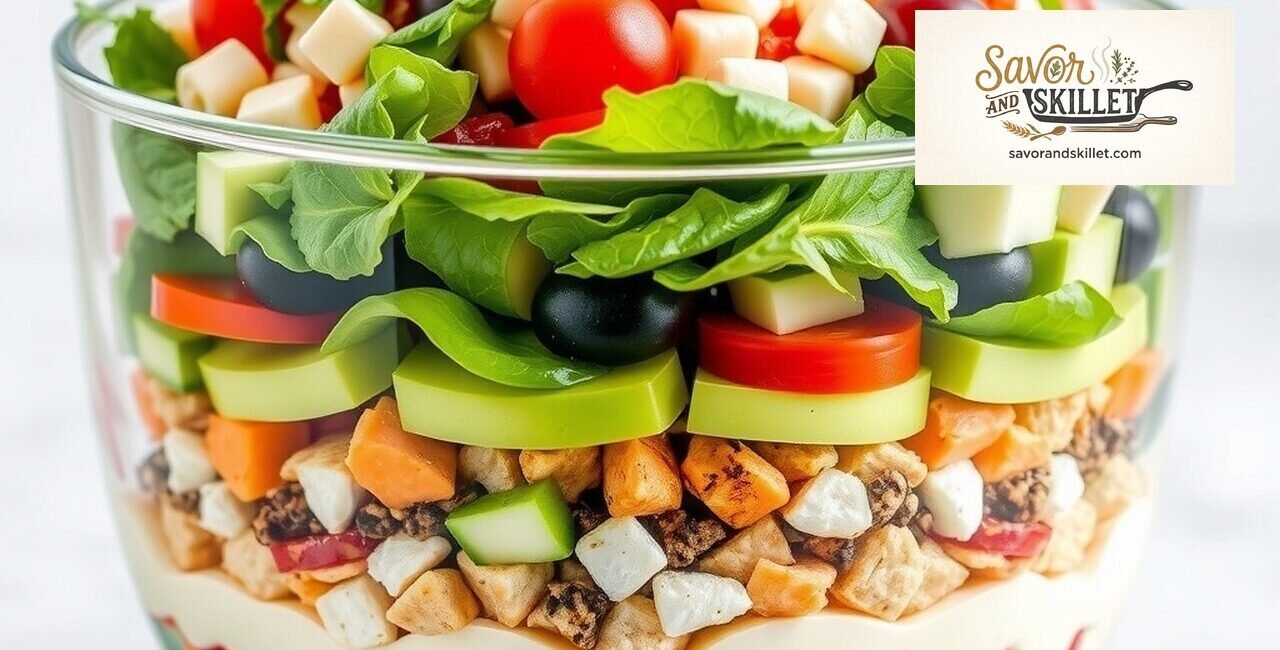
There are few dishes as iconic at a potluck or summer gathering as the classic Seven Layer Salad. If you have ever stared at a glass bowl filled with vibrant, distinct rows of vegetables, proteins, and creamy dressings, you already know the visual appeal of this American staple. At Savor and Skillet, we find that the best versions of this dish rely on structural integrity and fresh, crisp components. Whether you are looking for an easy seven layer salad recipe to bring to a 2026 backyard barbecue or simply want to elevate your weeknight dinner with a refreshing side, mastering the layering technique is the key to success. Let’s dive into how to build a salad that stays crisp, looks stunning, and tastes balanced every single time.
Also Read: Buttermilk Pancakes Recipe: How to Make It
What is a Seven Layer Salad?
Seven Layer Salad is a traditional American salad constructed by stacking seven distinct, colorful ingredients—typically lettuce, vegetables, peas, eggs, bacon, and cheese—in a clear glass bowl, topped with a creamy mayonnaise-based dressing. The flavor profile is a harmonious mix of savory, salty, and slightly sweet elements, offering a satisfying crunch and creamy texture in every bite.
This dish is worth making because it thrives on prep-ahead convenience. Unlike tossed salads that wilt after an hour of dressing, the structural design of this recipe keeps the crisp vegetables separated from the moisture of the dressing until the very last moment. As we navigate culinary trends in 2026, the resurgence of “retro-modern” dishes highlights why this salad remains a favorite for large crowds and family meals alike.
Ingredients and Preparation Essentials
Servings: 8-10 | Prep Time: 25 minutes | Cook Time: 10 minutes (bacon/eggs) | Total Time: 35 minutes | Difficulty: Easy
- Layer 1 (Base): 6 cups chopped iceberg or romaine lettuce.
- Layer 2: 1 cup red onion, finely diced.
- Layer 3: 1 cup celery, sliced thin.
- Layer 4: 1 package (10 oz) frozen green peas, thawed but not cooked.
- Layer 5: 8 oz sharp cheddar cheese, freshly shredded.
- Layer 6: 8-10 slices bacon, cooked until crispy and crumbled.
- Layer 7 (Top): 1 cup mayonnaise, mixed with 2 tablespoons sugar and 1 teaspoon apple cider vinegar.
- Garnish: 2 hard-boiled eggs, sliced, and fresh parsley or scallions.
To ensure your ingredients perform as expected, I recommend using a high-quality mayonnaise such as Hellmann’s or Duke’s, as these brands offer the stable emulsion required for the topping. If you prefer a lighter profile, you can substitute half the mayonnaise with Greek yogurt, though this will slightly alter the traditional tang. For the bacon, avoid pre-packaged bits if possible; pan-frying fresh bacon provides a superior smoky depth that elevates the entire dish.
How to Make Seven Layer Salad
Now that you have gathered your fresh ingredients and prepared your mise en place, we can move on to the actual assembly. The secret to this dish lies in the layering order, which prevents the moisture from the vegetables from saturating the crisp lettuce too early.
- Prepare the Base: Ensure your lettuce is thoroughly washed and spun dry in a salad spinner. Moisture is the enemy of this salad; if the leaves are damp, the bottom of the bowl will become unappetizingly soggy within an hour. Place the dried, chopped lettuce in an even layer at the bottom of a large, deep glass trifle bowl or a straight-sided serving dish.
- Build the Vegetable Tiers: Spread the diced red onion evenly over the lettuce. Follow this with the celery. The crunch of the celery acts as a barrier, providing a solid foundation for the subsequent layers.
- Add the Peas: Scatter the thawed green peas across the celery. You do not need to cook them; the texture of raw or just-thawed peas provides a pleasant pop of sweetness against the savory layers above and below.
- Apply the Cheese and Bacon: Spread your shredded sharp cheddar cheese over the peas, pressing down lightly if necessary. Follow this with the crumbled bacon. You want the bacon layer to be generous—this is the primary source of the “umami” punch that defines the dish.
- The Dressing “Seal”: In a small bowl, whisk the mayonnaise, sugar, and vinegar until smooth. Spread this mixture over the top, using an offset spatula to reach all the way to the edges of the glass. This is crucial: the dressing must act as a “seal” covering all the ingredients below to prevent them from drying out in the refrigerator.
- Final Garnish: Arrange your sliced hard-boiled eggs on top of the dressing. Sprinkle with a little extra bacon or finely chopped green onions for a pop of color.
Salads are truly delicious and incredibly healthy—especially when arranged in seven layers. These seven super-healthy layers certainly make for a delightful eating experience. Give it a try so you can fully enjoy this dish; be sure to watch the cooking video as well to ensure the flavor turns out exactly as intended. Here is the tutorial video:
Chef Tips for Structural Integrity
Since we have just finished assembling the salad, it is vital to understand how to maintain its integrity during storage. One of the most common mistakes I see involves the dressing consistency. If your dressing is too thin, it will sink through the layers, causing the lettuce to wilt prematurely. In my experience, keeping the dressing thick enough to spread like frosting is the best way to ensure the layers remain distinct when you finally bring the salad to the table.
Always use a glass bowl. Not only does it show off the aesthetic beauty of the layers, but it also helps with the temperature regulation of the ingredients. If you are preparing this for a warm summer day in 2026, keep the salad refrigerated until the very last second. The cold temperature keeps the mayo mixture firm and the vegetables crisp.
Common Mistakes and How to Fix Them
With the layering technique mastered, it is natural to worry about potential pitfalls that might occur during the prep process. If you find that your lettuce has wilted, it is usually because the lettuce was not dried properly or the salad sat for too long before serving. I suggest assembling the salad no more than 4 hours before your event. If you need more time, keep the dressing separate and spread it on just before you head out the door.
Another common issue is the “browning” of the lettuce. If you notice this happening, ensure that the bacon is completely cooled before it goes into the bowl. If you add hot bacon, the heat will wilt the lettuce immediately and create condensation, which leads to soggy ingredients. Patience during the cooling phase is a mark of professional food safety and quality control.
Frequently Asked Questions About Seven Layer Salad
Can I make Seven Layer Salad the day before?
Yes, you can assemble it up to 24 hours in advance, provided you follow the “dressing seal” method perfectly. If the dressing does not touch the edges of the glass or leaves gaps, the ingredients underneath will oxidize and lose their crunch, so take extra care to spread it edge-to-edge.
What is the best way to serve this salad?
The best way to serve this is to use a long serving spoon that reaches all the way to the bottom of the bowl. When you scoop, aim to get a portion of every single layer so your guests can experience the full range of flavors and textures in one bite.
Can I add protein to make it a main dish?
Absolutely, you can turn this into a main course by adding layers of diced rotisserie chicken or chickpeas. If adding extra protein, I recommend placing it right above the lettuce layer to ensure it stays chilled and incorporated into the body of the salad.
Why does my salad get watery?
Watery salad usually results from using ingredients that have not been thoroughly dried or from using salted vegetables that released liquid. Avoid salting your vegetables directly; let the salt from the bacon and the seasoning in the mayonnaise handle the flavor balance.
Are there any healthy variations for the dressing?
You can substitute the mayonnaise with a mix of avocado oil mayo and plain Greek yogurt for a lighter profile. This reduces the saturated fat content while maintaining the creamy consistency required to keep the salad sealed and fresh.
Final Thoughts on the Perfect Seven Layer Salad
After walking through the assembly, techniques, and troubleshooting for the Seven Layer Salad, it is clear why this dish remains a cornerstone of American entertaining in 2026. By respecting the order of the layers and ensuring your vegetables are properly dried, you can create a centerpiece that is as functional as it is beautiful. Remember, the true magic of this recipe is in the “seal”—don’t be afraid to be generous with your dressing on that top layer.
If you enjoyed this breakdown, try making this recipe for your next gathering and notice how the crowd reacts to the perfect crunch-to-cream ratio. We at Savor and Skillet love hearing how these classic dishes turn out in your home kitchen, so don’t hesitate to share your results with us. Happy cooking!

Other Articles

Broccoli Salad Recipe: How to Make It
How to Make Ambrosia Salad: Recipe and Instructions

No Comment! Be the first one.