



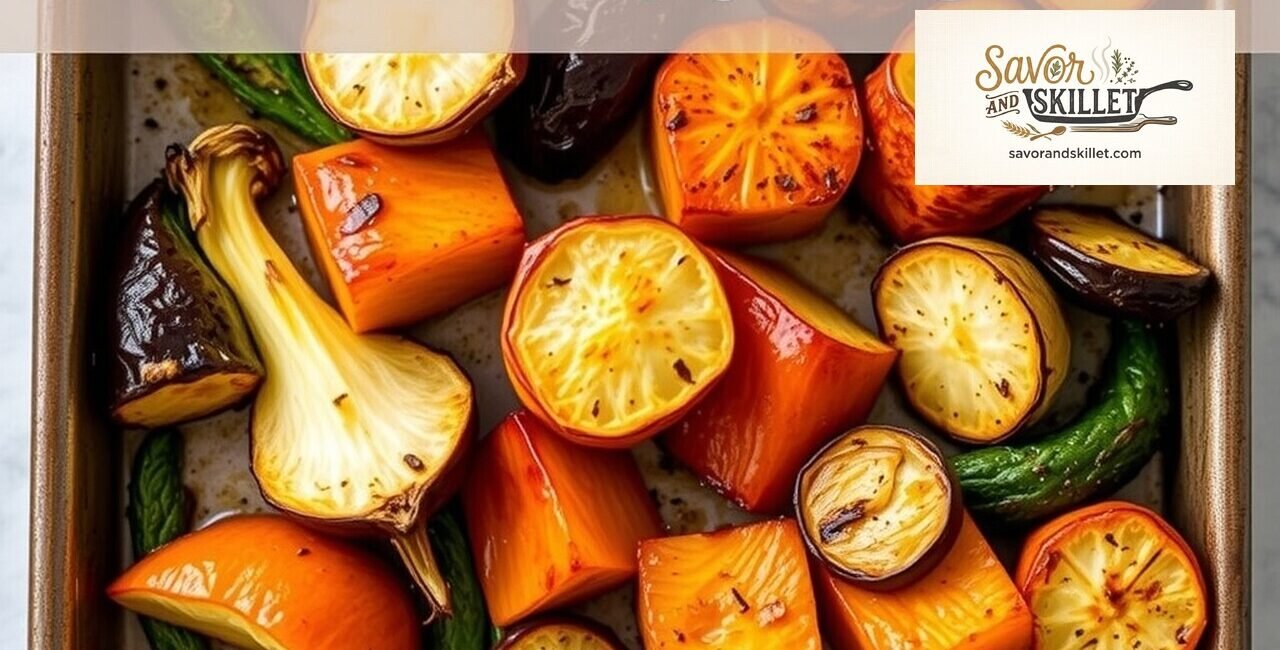
Have you ever pulled a baking sheet from your oven, only to find a tray of soggy, steamed produce instead of that golden-brown perfection you craved? Learning how to roast vegetables with crispy edges is the ultimate kitchen upgrade for 2026. Whether you are a beginner or a seasoned home cook, achieving that caramelized texture is more about scientific principles than culinary luck. If you are looking to master the roast vegetables with crispy edges technique, you have come to the right place. Let’s break this down step by step.
Also Read: How Chinese, Japanese, Korean, Thai, and Vietnamese Flavors Differ
Understanding the Science of Caramelized Roasting
Roast vegetables with crispy edges is a thermal cooking technique that relies on the Maillard reaction to convert natural vegetable sugars into complex, savory flavor compounds while evaporating surface moisture. By utilizing high heat and precise spacing, you create a dehydrated, golden exterior that contrasts beautifully with a tender, softened interior.
According to food science research, the Maillard reaction—the chemical process that creates the nutty, browned flavor profile—begins accelerating rapidly once temperatures exceed 300°F (149°C). At Savor and Skillet, we find that understanding this temperature threshold is the most important step for beginners. Most home cooks mistakenly keep their oven temperatures too low, which results in the vegetables steaming in their own juices rather than roasting.
The Role of Surface Moisture

The primary enemy of a crispy finish is water. Vegetables are composed largely of water, and when they are crowded on a pan, that water releases as steam. This creates a humid environment where the temperature cannot rise high enough to facilitate the browning reaction. Think of it like a sauna: if the air is too thick with moisture, you will never achieve that crisp, dry exterior that defines a professional-grade roast.
Temperature Control and Airflow
To truly master how to roast vegetables with crispy edges, you must prioritize airflow. Using a heavy-duty, light-colored aluminum baking sheet—like those manufactured by Nordic Ware—allows for even heat distribution. Avoid overcrowding the pan at all costs; leave at least an inch of space between each piece of vegetable to ensure hot air can circulate freely around every side.
The Essential Prep Work for Consistent Results
To learn about how to Make Perfectly Roasted Vegetables, maybe a lil bit hard when you just reading this tutorial. So i as a writter on Savor and Skillet website is displaying for you a video that can really help you to Make Perfectly Roasted Vegetables. Just watch the video’s below:
Now that we have covered the scientific foundation of the Maillard reaction, let’s move on to the essential preparation steps required to roast vegetables with crispy edges consistently. If you skip these preliminary measures, you might find that even the best oven temperatures fail to produce the desired crunch.
Uniform Cutting Techniques
I cannot stress this enough: size matters. If your carrots are cut into half-inch rounds while your potatoes are left in two-inch chunks, you will end up with a tray where some items are burnt to a crisp and others are raw. Aim for uniform sizes across your entire batch. A consistent shape ensures that every piece reaches the “golden-brown” stage at the exact same moment.
The Importance of Drying
Here is something most guides won’t tell you: give your vegetables a thorough pat-down with a kitchen towel before tossing them in oil. Even if you have just washed them, residual moisture on the surface of the vegetable will immediately turn to steam the moment it hits the hot sheet. By starting with a dry vegetable, you give the Maillard reaction a head start, significantly shortening the time needed to develop those crispy edges.
Selecting and Applying Fats and Seasonings
Since you now understand the importance of prep work, let’s explore how fat selection impacts the ability to roast vegetables with crispy edges and why it matters just as much as temperature. Not all fats behave the same way under high-heat conditions.
Choosing the Right Cooking Fat
For the best results, you need a fat with a high smoke point. Extra virgin olive oil is fantastic for flavor, but for high-heat roasting (typically 425°F to 450°F), I prefer refined avocado oil or grapeseed oil. These oils can handle the heat without breaking down or burning, which preserves the integrity of your vegetables. According to data from the Serious Eats culinary science database, using a high-smoke-point oil is critical for achieving a clean, crispy finish without the risk of acrid flavors from scorched oil.
The Salt Paradox
Many beginners think that salting early draws out too much moisture. In my experience, salt is a crucial element for crispy edges because it draws out surface water early in the process, allowing the surface to dehydrate faster in the oven. The key is to season right before they go into the oven—do not let them sit for long periods after salting, or they will indeed become soft.
Advanced Techniques for Crispness
With the basics of fat and seasoning under your belt, we can explore advanced tactics to roast vegetables with crispy edges that yield professional-level results every time. Let’s dig into the hardware and heat management strategies that elevate a basic roast.
The Preheated Pan Method
If you want to move from “good” to “restaurant-quality,” try preheating your baking sheet in the oven while it warms up. When you transfer your seasoned vegetables to a searing-hot pan, the edges begin to caramelize on contact. It is a simple trick, but it is one of the most effective ways to guarantee that bottom-side crispiness that is so often missing from home-cooked dishes.
The Halfway Flip
Even with convection heat, the side of the vegetable touching the pan will always brown faster than the top. I have found that a single, decisive flip halfway through the cooking time is usually enough to balance the colors. Don’t flip them constantly! The more you move the vegetables, the more likely you are to break them and release more internal moisture.
Frequently Asked Questions About roast vegetables with crispy edges
We just unpacked advanced roasting techniques—now here is where it gets really interesting: how to troubleshoot the most common issues through our FAQ.
Why are my roasted vegetables always soggy instead of crispy?
Soggy vegetables are almost always caused by overcrowding the baking sheet or using a low oven temperature. Ensure there is enough space between vegetables for air to circulate and bump your heat to at least 425°F to ensure rapid moisture evaporation.
What are the best vegetables to roast for crispy edges?
Root vegetables and cruciferous vegetables perform best for this technique. Vegetables like broccoli, cauliflower, Brussels sprouts, carrots, and parsnips have lower water content and higher natural sugar content, which makes them prime candidates for caramelization.
Can I use parchment paper when roasting?
Yes, parchment paper is excellent for easy cleanup and preventing sticking, which can keep your crispy edges intact. However, avoid using silicone baking mats if you are looking for maximum crispness, as they can sometimes insulate the bottom of the vegetables too much, preventing that direct-heat sear.
How do I know when the vegetables are done?
The visual cue for “done” is a deep, golden-brown color on the edges and a tender center when pierced with a fork. In 2026, many chefs are using high-end digital thermometers to check for doneness, but for roasted vegetables, the “fork-tender” test remains the gold standard for accuracy.
Does adding sugar or honey help the roasting process?
Adding a small amount of sugar or honey can accelerate browning, but you must be very careful as these additives burn easily. If you want to use a glaze, it is usually better to toss the vegetables in the glaze during the last 5 minutes of roasting to prevent them from turning bitter.
Final Thoughts on Mastering the Roast
After covering these frequently asked questions, the obvious next question is: how do you keep this practice consistent? Remember that mastery comes from observation. Every oven is unique, and as of 2026, most kitchen appliances have slight temperature variances. I encourage you to start keeping a small kitchen notebook to log which temperatures and times work best for your specific setup.
To summarize, the core pillars of achieving the perfect roast are high heat, minimal crowding, and dry surfaces. When you combine these with a high-smoke-point oil, you are almost guaranteed a delicious result. I hope this guide from Savor and Skillet helps you transform your weeknight dinner routine. If you found these tips useful, please share this guide with a friend or leave a comment below with your favorite vegetable to roast! For more tips on kitchen equipment, be sure to check out our other guides on the site. See you in the next article! — Mirdania, Savor and Skillet

Other Articles

How Often Should You Replace Kitchen Sponges?
Can You Eat Food Past Its Best-By-Date?

No Comment! Be the first one.