




There is something inherently communal and comforting about gathering around a shared pot of molten, savory goodness. If you have been searching for a foolproof Swiss Cheese Fondue recipe, you are in the right place. As we head into the 2026 hosting season, mastering this classic alpine dish—which you can find detailed in our Swiss Cheese Fondue collection—is a skill that will elevate any dinner party or cozy night in. I remember the first time I attempted a traditional emulsion; it felt a bit like a culinary chemistry experiment, but once you understand the rhythm, it becomes second nature. Let’s break down how to achieve that silky, luxurious texture at home.
Also Read: Classic American Meatloaf Recipe: How to Make It Step by Step
What Exactly Is Swiss Cheese Fondue?

Swiss Cheese Fondue is a traditional Alpine dish consisting of a blend of melted cheeses—typically Gruyère and Emmental—emulsified with white wine, garlic, and a touch of starch to create a smooth, velvety dip. It is served communal-style in a heated pot called a caquelon, providing a rich, savory experience defined by its complex, nutty aroma and decadent, stretchy texture that pairs perfectly with crusty bread or crisp vegetables.
Essential Ingredients and Equipment

Before we dive into the method, let’s organize our workspace. Making an easy Swiss Cheese Fondue recipe requires more than just good cheese; it requires the right tools and a bit of prep. At Savor and Skillet, we recommend having your mise en place ready before you turn on the stove.
Recipe Card: Classic Swiss Fondue
- Servings: 4-6 people
- Prep Time: 15 minutes
- Cook Time: 10 minutes
- Total Time: 25 minutes
- Difficulty: Intermediate
Ingredients:
- 1 clove garlic, halved
- 1 1/4 cups dry white wine (a crisp Sauvignon Blanc or dry Riesling works well)
- 1 teaspoon lemon juice
- 450g (1 lb) Gruyère cheese, freshly shredded
- 225g (0.5 lb) Emmental cheese, freshly shredded
- 1.5 tablespoons cornstarch
- 1 tablespoon Kirsch (cherry brandy, optional)
- A pinch of nutmeg and freshly cracked white pepper
Chef’s Note: Always grate your own cheese. Pre-shredded bags are coated in cellulose, which prevents proper melting and can lead to a grainy or separated sauce.
How to Make Swiss Cheese Fondue
Since you now have your ingredients prepped and your cheese freshly grated, we can move on to the actual cooking process. Achieving the perfect emulsion is the key to how to make Swiss cheese fondue that doesn’t split, so follow these steps carefully.
- Rub the Pot: Take your halved garlic clove and rub it vigorously over the inside of your heavy-bottomed pot or fondue caquelon. You can mince the remaining garlic and leave it in the pot for extra flavor.
- Heat the Wine: Pour the white wine and lemon juice into the pot over medium heat. Bring it to a gentle simmer—do not let it boil over. The acidity of the wine and lemon is crucial for stabilizing the cheese proteins.
- Prepare the Cheese: Toss your shredded Gruyère and Emmental with the cornstarch in a large bowl. This ensures that every bit of cheese is coated, which helps bind the wine and fat together.
- Incorporate the Cheese: Add the cheese to the simmering wine one handful at a time. Stir in a slow, figure-eight motion using a wooden spoon. Wait until the first handful is almost entirely melted before adding the next.
- Finish and Season: Once the mixture is smooth and bubbling gently, stir in the Kirsch, nutmeg, and pepper. If the mixture looks too thick, add a tiny splash of warm wine. If it’s too thin, whisk in a teaspoon of cornstarch mixed with a drop of cold water.
- Serve: Move the pot to your tabletop burner immediately. The temperature must remain just warm enough to keep the fondue liquid, but not so hot that the cheese burns at the bottom.
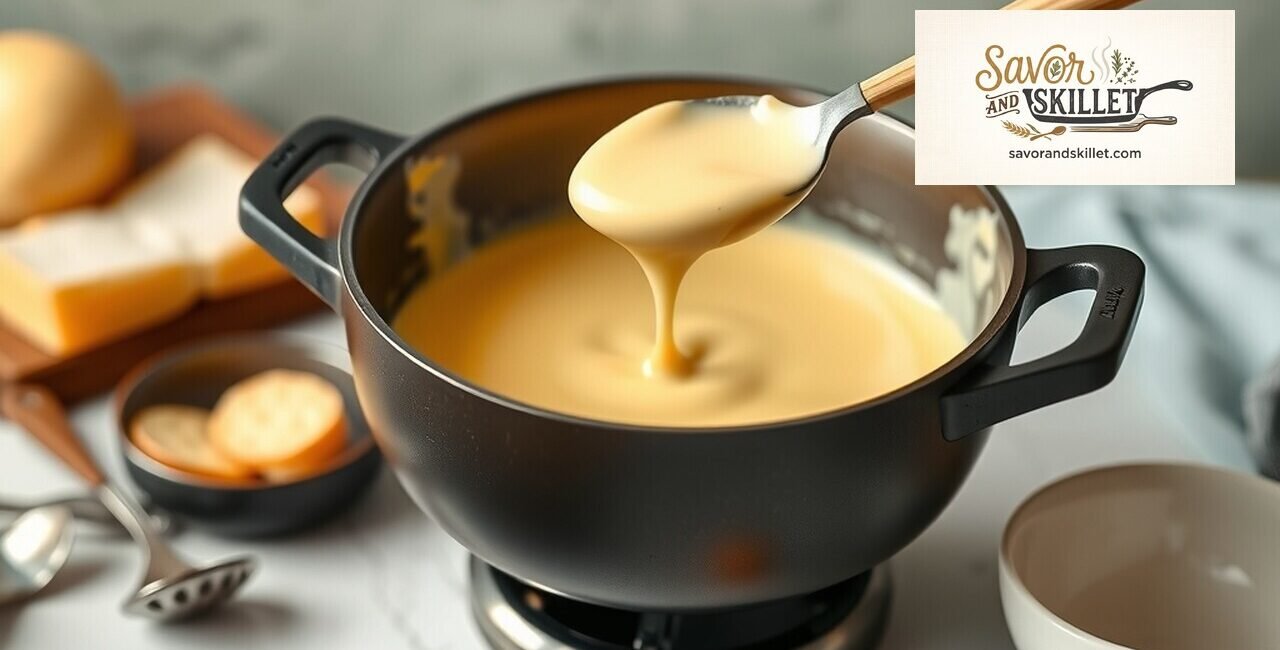
A rich, savory blend of melted Gruyère and Vacherin cheeses—infused with warm white wine—makes the perfect dip for chunks of crusty French bread. Swiss Cheese Fondue is a classic delight that’s ideal for warming up the atmosphere and providing a satisfying energy boost during social gatherings. I’m sharing this Alpine-style cheese party recipe here on Savor and Skillet so you can enjoy the sensation of creamy, rich, and indulgent cheese fondue right at your own dining table.
To ensure the cheese melts into a smooth, velvety consistency without clumping or separating, check out the secrets to making it in the video tutorial I’ve included below:
Refining Your Technique: Common Pitfalls
After walking through the step-by-step cooking process, it’s important to address why even the best chefs occasionally face trouble. The most common error in Swiss cheese fondue cooking time and technique is heat management. If the cheese separates or becomes oily, it is usually because the heat was too high or the cheese was added too quickly.
If you notice the fondue starting to clump, turn the heat to the lowest setting and add a splash of room-temperature white wine. Whisk vigorously—I’ve found that a steady, consistent motion can often save a split sauce if you catch it early enough. Think of it like making a hollandaise; patience is your best friend here. If you are interested in more kitchen techniques, check out our guide on mastering temperature control for delicate sauces.
Pro Tips for the Best Swiss Cheese Fondue
With the technique section covered, let’s look at how to ensure your results are consistently high-quality every time you serve. The best Swiss cheese fondue recipe hinges on the quality of your base. According to data from culinary experts in 2026, using high-quality, aged Gruyère provides the most depth, while the Emmental contributes that signature meltability that makes fondue so addictive.
When choosing your dippers, aim for contrast. Crusty French bread or sourdough is the classic choice, but don’t be afraid to branch out. Blanched broccoli, roasted fingerling potatoes, or even crisp granny smith apple slices offer a refreshing acidic bite that cuts through the richness of the cheese. Remember, the goal is to balance the heaviness of the fat with textures that provide a bit of “crunch” or “snap.”
Frequently Asked Questions About Swiss Cheese Fondue
What can I use if I don’t have Kirsch?
You can substitute Kirsch with a bit of dry sherry or simply omit it. If you want to maintain that slight fruity depth, a drop of apple cider or additional lemon juice can work in a pinch.
Why did my cheese fondue separate into oil and lumps?
Separation usually happens due to excessive heat or adding cheese too quickly without proper agitation. Always keep the heat low and whisk consistently to keep the emulsion stable.
Can I make Swiss cheese fondue ahead of time?
It is best served immediately for the ideal texture. However, if you must make it ahead, you can reheat it very slowly on the stovetop, whisking constantly, though the texture may not be quite as perfect as when it is freshly prepared.
What is the secret to a smooth fondue?
The secret is using cornstarch to bind the wine and cheese proteins together. Additionally, always grate your cheese fresh—the anti-caking agents in pre-shredded cheese will ruin the smooth consistency of the fondue.
How long should I keep the fondue warm?
Keep it warm just until the cheese is finished, typically 30 to 45 minutes on a tabletop burner. Leaving it on heat for too long will cause the cheese to overcook and eventually turn rubbery or bitter.
Conclusion
We just unpacked the essentials of Swiss cheese fondue, from the science of the emulsion to the best dippers for your next gathering. Whether you are a first-timer or a seasoned entertainer, this recipe is designed to be approachable and consistently delicious. As we look ahead to 2026, remember that the “perfect” meal is often about the company you share it with as much as the food itself. Try this recipe this weekend—the balance of sharp, melted cheese and crisp wine is a combination that never goes out of style. If you found this guide helpful, stay tuned for more culinary tips from the Savor and Skillet kitchen.

Other Articles

How to Make Raclette Suisse: Recipe and Instructions
Kaiserschmarrn Recipe: How to Make It Step by Step

No Comment! Be the first one.