




Stepping into a professional kitchen or even a well-equipped home culinary space often feels like walking into a laboratory of sharp, intimidating steel. If you are standing in front of a cutlery block wondering about the chefs knife vs. santoku knife debate in 2026, you are certainly not alone. Choosing between these two workhorses is the most common crossroads for both novice home cooks and seasoned enthusiasts. Whether you are prepping for a Sunday roast or just trying to get through your nightly meal prep without a blister, knowing the difference is essential. You can find our deep-dive analysis on the chefs knife vs santoku knife comparison right here as we break down the geometry, the history, and the practical application of these two kitchen legends. Let’s look at how they compare step by step.
Also Read: Bamboo vs Plastic Cutting Boards
Understanding the Basics of the chefs knife vs. santoku knife Comparison
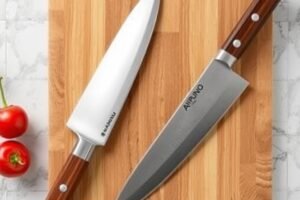
chefs knife vs. santoku knife is a comparison between the classic Western-style multipurpose blade and its Japanese counterpart, designed for precision and efficiency. While a chef’s knife features a curved profile ideal for rocking cuts, a santoku blade is flatter with a specialized edge profile, often featuring indentations to prevent food from sticking during high-volume chopping.
According to 2026 data on kitchen equipment ergonomics, the average home cook spends over 60% of their prep time engaged in repetitive slicing and dicing. This is where the weight and geometry of your blade dictate not just how fast you work, but how long your hand can stay comfortable. When I first started looking into knife manufacturing standards, it was fascinating to see how the Western chef’s knife—heavily influenced by the French and German traditions—prioritizes versatility above all else. Brands like Wüsthof and Zwilling have defined this segment for decades, focusing on a heavy bolster and a deep, curved belly that facilitates a “rocking” motion on the cutting board. Conversely, the Japanese santoku, which translates literally to “three virtues” (slicing, dicing, and mincing), is a product of evolving culinary needs in Japan where smaller, lighter blades are preferred for a clean, downward chopping motion.
The Anatomy of the Western Chef’s Knife
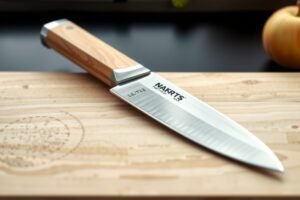
The Western chef’s knife is defined by its length—typically 8 to 10 inches—and its pronounced curvature at the tip. This design is built for the “rocking” technique, where the tip stays in contact with the board while the heel moves up and down. If you are handling large ingredients like a whole butternut squash or a watermelon, the sheer mass and length of the chef’s knife provide the leverage you need to get the job done safely.
The Architecture of the Santoku
The santoku is generally shorter, usually ranging from 5 to 7 inches, and features a flatter edge. Many modern versions, such as those produced by Global or Shun, feature a Granton edge—those little divots along the blade—which create air pockets to help ingredients fall away from the steel. It is a leaner, more precise tool that feels significantly more agile in the hand if you are doing repetitive work like dicing onions or carrots.
There are so many types of knives out there—do you, the readers of *Savor and Skillet*, know how many kinds of kitchen knives exist? In this article, we’re going to discuss two specific types: the Chef’s Knife and the Santoku Knife.
As always, to ensure you get a comprehensive understanding, I’ve included a video here that you can watch for free. It comes from the YouTube channel “I Want To Cook” and is titled *Santoku vs Chef’s Knife: Which Is Better For You?*
If you’re curious and want to jump straight to the video, you can watch it below:
Evaluating Performance: The chefs knife vs. santoku knife for Beginners
Now that we have covered the basic structural differences in the chefs knife vs. santoku knife comparison, let’s move on to something equally important: which one is actually better for someone just starting their culinary journey? Choosing the right tool for beginners often comes down to comfort and the physical size of the cook’s hands.
In my experience, many beginners are overwhelmed by the intimidating size of an 8-inch chef’s knife. It feels long, cumbersome, and hard to control if you haven’t mastered your grip yet. The santoku, because of its shorter length, often feels more “manageable.” However, I always warn friends that if you have large hands, a small santoku might feel cramped. The lack of a sharp, pointed tip on a santoku can also be a hurdle for tasks like deboning chicken or performing delicate decorative work where the tip of the knife is required for precision.
Safety and Control Metrics
Safety is not just about the sharpness of the blade; it is about how much control you have during high-speed tasks. A chef’s knife offers a full bolster in many models, which acts as a guard for your fingers. When using a santoku, which often lacks a heavy bolster, your grip must be more refined to ensure the knife doesn’t slide. Most culinary schools advocate for the “pinch grip,” and regardless of which knife you choose, mastering this technique will make you feel like a pro in no time.
Technique-Specific Use Cases
If your style involves a lot of “rocking,” you will find the chef’s knife superior. But if you prefer a “push-cut” motion, where you lift the blade entirely off the board and move it forward, the santoku is arguably the superior tool. This is a point where Savor and Skillet often receives questions regarding efficiency; the answer almost always depends on whether you have a “rocker” or a “chopper” personality in the kitchen.
Maintenance and Durability Requirements
Since you now understand the performance nuances between the chefs knife vs. santoku knife for beginners, here is how material maintenance connects—and why it matters just as much to the longevity of your investment. It is tempting to buy the most expensive blade on the market, but if you don’t know how to care for the steel, you will be disappointed within a month.
Most Western-style chef’s knives use a slightly softer steel (such as X50CrMoV15), which is designed to be durable and resistant to chipping. This means they are easier to hone with a steel rod and can handle the occasional bone or accidental contact with a ceramic plate better than their Japanese counterparts. Santoku knives, particularly those crafted from high-carbon Japanese steel like VG-10, are much harder. While they hold an edge significantly longer, that hardness comes at a price: they are more prone to micro-chipping if you strike a bone or use them on a glass cutting board. If you skip the section on proper board selection—always use wood or rubber, never glass—you will end up with a dull, damaged blade regardless of how much you spent on it.
Honing Versus Sharpening
There is a massive difference between these two tasks. Honing with a steel rod is something you should do before every major cooking session to realign the edge of your chef’s knife. Sharpening, which involves removing metal to create a new edge, is a more intensive process. For a harder santoku blade, you will likely need a whetstone rather than a simple pull-through sharpener, as the angle of the blade is often steeper (around 15 degrees) compared to the 20-degree angle common on many German chef’s knives.
Storage Best Practices
Both styles of knives are best kept in a magnetic strip or a dedicated knife block. Storing your knives loose in a drawer is the fastest way to degrade the edge. In my view, the magnetic strip is the gold standard because it allows the blade to air-dry completely and prevents the edge from clinking against other utensils, which is a major no-no for keeping your kitchen tools in tip-top shape.
Frequently Asked Questions About chefs knife vs. santoku knife
We just unpacked the maintenance requirements for both blade types; now here is where it gets really interesting: the common questions that keep most home cooks up at night. Whether you are leaning toward the chef’s knife or the santoku, the following questions cover the most common pain points.
Which knife is safer for a novice cook?
Generally, a santoku is considered slightly safer for novices due to its shorter blade length and lower center of gravity. The reduced length makes the blade feel less “runaway” while learning basic knife skills, though proper training is ultimately more important than the knife type.
Can a santoku replace a chef’s knife entirely?
For most home cooking, yes, a santoku can serve as an all-purpose blade. However, if your recipes frequently involve breaking down large proteins or heavy-duty vegetable butchery, you will likely find yourself missing the length and belly curvature of a traditional chef’s knife.
Is the Granton edge on a santoku just for show?
No, the Granton edge (the scalloped indentations) is highly functional for specific tasks. By creating small air pockets between the blade and the food, it helps prevent thin, starchy vegetables like potatoes or cucumbers from sticking to the side of the knife as you slice.
How does the weight difference affect fatigue?
Weight is a personal preference, but in general, lighter knives like the santoku cause less fatigue over long sessions for smaller-handed users. Conversely, heavier chef’s knives use gravity to do more of the work, which can be beneficial if you are chopping through dense items like root vegetables.
Should I prioritize brand reputation when choosing between these knives?
Brand reputation is a helpful indicator of quality, but it should not be the only factor. It is far more important to focus on the steel type, the tang (full tang is preferred for durability), and, most importantly, the handle ergonomics that fit your specific grip.
Conclusion: Finding Your Perfect Kitchen Partner
After covering the frequently asked questions about the chefs knife vs. santoku knife, the obvious next question is: what is the final verdict? If you are looking for a versatile, heavy-duty companion that can handle everything from crushing garlic to disjointing chicken, the classic chef’s knife remains the undisputed king of the kitchen. However, if your culinary life revolves around high-speed prep, thin slicing, and delicate vegetable work, the agility of the santoku might make your time at the cutting board feel like less of a chore and more of a creative exercise.
Ultimately, there is no “correct” answer—only the right tool for your specific set of habits. I hope this guide from Savor and Skillet helps you navigate your next purchase with confidence, ensuring you get the best performance for your kitchen needs. For further reading on essential gear, check out our piece on choosing the best cutting boards to protect your new investment. Do you have a favorite knife in your block? Let us know in the comments below or share this guide with a friend who is currently agonizing over their next upgrade. See you in the next article! — Mirdania, Savor and Skillet.

How to Choose the Right Kitchen Knife Size
How to Clean an Air Fryer Safely

No Comment! Be the first one.