




Have you ever reached for a chef’s knife only to feel like you were wielding a clumsy, oversized sword, or perhaps a paring knife that left your knuckles scraping against the cutting board? Finding the right kitchen knife size is arguably the most critical step toward mastering your culinary space, yet it is frequently ignored by casual home cooks. As we look toward the landscape of home cooking in 2026, the shift is moving away from massive, “one-size-fits-all” block sets and toward curated, ergonomic tools that actually fit your hand and your specific cutting tasks. Let’s break this down step by step to ensure your kitchen kit is optimized for efficiency and safety.
Understanding the Right Kitchen Knife Size and Function

The right kitchen knife size is a measurement—typically ranging from 6 to 10 inches for a chef’s knife—that balances blade length, weight, and your individual hand size to provide maximum control and safety during food preparation. Choosing the correct length ensures that you can utilize the entire edge for slicing, dicing, and chopping without compromising stability or risking repetitive strain injury.
According to ergonomic data analyzed in 2026, the vast majority of kitchen-related hand fatigue stems from using a knife that is disproportionate to the user’s grip strength and palm width. When you select a blade that matches your physical profile, you gain the mechanical advantage necessary for precise cuts. At Savor and Skillet, we emphasize that a knife is an extension of the arm, not just a tool; if the tool is too long, the tip becomes difficult to stabilize, and if it is too short, you lack the leverage needed for larger items like squash or watermelons.
The Role of Blade Length in Cutting Mechanics
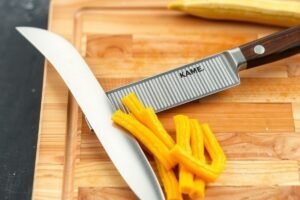
The length of your knife dictates how much surface area of the cutting board you can interact with at once. A standard 8-inch chef’s knife is widely considered the industry “sweet spot,” providing enough length to handle large produce while remaining agile enough for detail work. However, if your cutting space is compact, or your hands are smaller, an 8-inch blade might feel unwieldy. Understanding that the blade length acts as a lever is the first step to choosing the right tool for your specific setup.
Matching Knife Size to Your Cutting Environment
If you primarily work in a tight kitchen with limited counter space, a massive 10-inch blade can actually be a hindrance. You need room to maneuver the handle, and a blade that is too long will inevitably hit the backsplash or the edge of your workstation. Conversely, if you are tackling large-scale meal prep, such as processing multiple heads of cabbage or massive amounts of root vegetables, the extra length of a 10-inch blade can save you precious minutes by allowing for longer, sweeping cuts.
Evaluating Ergonomics and Personal Comfort
Now that we’ve covered the fundamental relationship between blade length and utility, let’s dive into the ergonomic factors that make or break your purchase. The right kitchen knife size isn’t just about the inches; it’s about how the tool feels in your grip during sustained use.
Hand Size vs. Handle Weight
One detail most manufacturers gloss over is the girth of the handle relative to the length of the blade. A person with small hands will struggle to gain a secure pinch grip on a thick-handled 10-inch knife, leading to poor control. Conversely, a person with larger hands might find a small, thin handle uncomfortable, leading to cramping. I’ve noticed that many cooks prioritize the brand name over the physical ergonomics of the handle, but in my experience, the feel of the handle is just as important as the steel quality of the blade itself.
Weight Distribution and Balance Points
When you hold a knife, you should look for the “balance point.” This is where the blade meets the handle (the bolster). If you are looking for the right kitchen knife size for beginners, aim for a knife that feels neutral—neither blade-heavy nor handle-heavy. A perfectly balanced knife allows the tool to do the work, reducing the effort you need to exert. Brands like Wüsthof often design their geometry to cater to this specific weight distribution, which is why they remain a staple in many professional and home kitchens alike.
Now, let’s learn through video. I’m Mirda, the admin of the *Savor and Skillet* website, and I’ve found a great video for you all to watch. It’s titled “How to Choose Chef Knife Size | Quick and Easy” and was created by the YouTube channel Honed.
I think this tutorial is excellent—detailed and spot-on—so I’ve embedded it right here in this article. If you’re curious, go ahead and play the YouTube video below:
The Right Kitchen Knife Size Buying Guide for Specific Tasks
Since you now understand the importance of ergonomics and balance, here is how task-specific sizing connects—and why it matters just as much when building your collection. Not every ingredient requires an 8-inch chef’s knife; in fact, using the wrong tool for the task is a major safety hazard.
Small Tasks: The 3 to 4-Inch Paring Knife
For detail-oriented work like peeling, coring, or trimming small vegetables, a paring knife is essential. Attempting to hull a strawberry or segment a citrus fruit with an 8-inch chef’s knife is like trying to perform surgery with a baseball bat. The precision afforded by a 3-inch blade is unmatched. If you find yourself frequently nicking your fingers or crushing delicate herbs, you aren’t lacking skill—you’re likely using the wrong size tool for the job.
Mid-Range Utility: The 5 to 6-Inch Utility Knife
Often called a “sandwich knife,” the 5 or 6-inch utility knife is the bridge between a paring knife and a chef’s knife. It is perfect for those who find a full-sized chef’s knife intimidating or physically heavy. For lighter prep work, such as slicing small tomatoes or cutting cheese, this size offers a balance of agility and strength that many home cooks find highly accessible.
Heavy Duty: The 10-Inch Chef’s Knife
While the 8-inch is standard, the 10-inch blade is a specialized tool. It provides more surface area and can handle large items with fewer strokes. However, this size requires a higher level of confidence in your knife skills. It is an excellent choice for those who do a lot of bulk prep, but it can be dangerous for someone who hasn’t mastered the “rock-chop” motion yet.
Comparing Blade Profiles and Materials
After covering the specific size requirements for different culinary tasks, the obvious next question is: what about the steel and edge geometry? Here is everything you need to know about how these factors interact with the right kitchen knife size.
The Impact of Steel Hardness on Sizing
The material composition—whether it is high-carbon stainless steel or a softer, easier-to-sharpen alloy—will affect how you choose your knife. According to the Serious Eats guide to knife buying, harder steels can hold a sharper edge for longer, but they can be brittle. If you choose a 10-inch blade made of very hard, brittle steel, you need to be much more careful about “twisting” the knife in the cut, as the long blade is more susceptible to snapping if handled roughly.
Straight Edge vs. Serrated Edges
Size isn’t just length; it’s also about the profile. A serrated knife, for instance, should almost always be longer (around 9 to 10 inches) to handle crusty loaves of bread effectively. A short, 4-inch serrated knife is rarely useful for anything beyond maybe cutting a tomato. When you are building your kitchen set, treat the size of the serrated knife as a separate consideration from your smooth-edged blades, as their functional purposes do not overlap.
Frequently Asked Questions About the right kitchen knife size
What is the most versatile kitchen knife size for a beginner?
An 8-inch chef’s knife is widely considered the most versatile choice for beginners. It is long enough to handle most ingredients yet small enough to maintain control, providing a perfect baseline for learning fundamental cutting techniques.
Should I choose a 6-inch or 8-inch chef’s knife?
Choose an 8-inch knife if you want a classic, all-purpose tool, but opt for a 6-inch blade if you have smaller hands or limited workspace. The 6-inch knife provides better maneuverability, which can increase safety for users who find the 8-inch size to be physically overwhelming.
Does the right kitchen knife size affect my chopping speed?
Yes, the correct size can significantly improve your efficiency. Using a knife that fits your hand and task allows for smoother, more consistent strokes, whereas an oversized or undersized tool will force you to compensate with awkward wrist movements, slowing down your prep time.
How do I know if my knife is too big for me?
If your knife feels heavy to lift, if the tip constantly hits your cutting board accidentally, or if you feel you have to “reach” too far to complete a full cut, it is likely too big. A properly sized knife should feel like a natural extension of your arm.
Can I just buy one knife for everything?
You can, but it is rarely optimal. While an 8-inch chef’s knife can perform 90% of kitchen tasks, having a dedicated smaller knife for peeling and a longer knife for large produce will make your work safer and more enjoyable in the long run.
Conclusion
We just unpacked the nuances of selecting the perfect tools — now here’s the wrap-up: choosing the right kitchen knife size is about aligning your physical comfort with the demands of your ingredients. By prioritizing ergonomics, understanding the leverage of different blade lengths, and matching the tool to the specific task, you elevate your efficiency and safety.
Remember that trends in 2026 are shifting back toward quality over quantity; a well-maintained, correctly sized knife will always outperform a drawer full of mismatched, poorly sized blades. I hope this guide from Savor and Skillet helps you make an informed decision for your next kitchen purchase. If you found this breakdown useful, please leave a comment below or share this article with a fellow home cook who might be struggling with their current gear. For more tips on kitchen maintenance, be sure to read our other articles on sharpening techniques and knife storage. See you in the next article! — Mirdania, Savor and Skillet.

Other Articles

How to Hold and Use a Chef’s Knife Safely
Chef’s Knife vs Santoku Knife: Which Is Right for You?
No Comment! Be the first one.